
VIP member
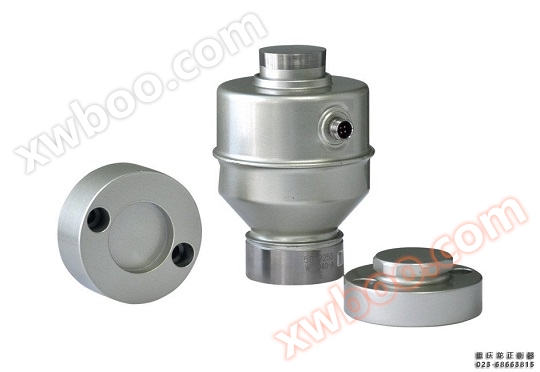
ZSW-D digital column weighing sensor
1、 Introduction: ZSW-D digital column weighing sensor has multiple ranges and specifications to choose from. Please refer to the above list and pictur
Product details
1、 Introduction:
The ZSW-D digital column weighing sensor has multiple ranges and specifications to choose from. Please refer to the above list and picture illustration for details. It supports multiple communication protocols from Keli Company, such as 40t range, all stainless steel, no junction box, inert gas protection, dust-free, and E-type communication protocol. This series of products are digital weighing sensors, which have the advantages of easy installation, compact structure, strong interchangeability, high weighing accuracy, stability and reliability. There are multiple ranges and specifications to choose from.
2、 Product Usage and Composition:
This product is mainly used in various electronic weighing equipment such as truck scales, track scales, and material tank scales.
This product consists of digital sensors, load-bearing heads, dust covers (suitable for G-type), packaging boxes, and other components.
3、 Main technical indicators:
Number Project parameter
1 Rated load range 20t、30t、40t、50t、60t
2 Accuracy Class OIML R60 C3
3 Creep Creep 0.015%F.S/30min
4 Temperature effect on output 0.01%F.S/10℃
5 Zero temperature affects Temp.Effect on zero 0.012%F.S/10℃
6 Temperature compensation range Compensated temp.range -10℃~+40℃
7 Use temp.range temperature range -30℃~+70℃
8 Supply voltage Excitation voltage 7~15V DC
9 Communication baud rate Communication BPS 9600/19200
10 Communication Mode RS 485
11 Safe overload limit 150%
12 Lateral load limit 300%
13 Protection class IP68/IP69K
14 Material Construction Alloy steel+stainless steel shell
100% stainless steel 100%
15 Wiring Code for Wiring Method Incentive+(VIN): Blue Incentive - (GND): Black Black
Signal+(485-A): White Signal - (485-B): Red
4、 Working principle:
Sensors are installed in electronic weighing equipment such as automobile scales. When force is transmitted to the sensor, the resistance of the internal circuit of the sensor changes, and a voltage signal is generated through a Wheatstone bridge. The voltage signal is converted into a digital signal through A/D conversion. The built-in intelligent module can linearly adjust, compensate and calibrate the digital signal, and can be easily connected to instruments or computer terminals for high-precision weighing detection.
Online inquiry
-
Contacts
-
Company
-
Telephone
-
Email
-
WeChat
-
Verification Code
-
Message Content
-